Rough Carpentry vs Finish Carpentry: What’s the Difference?

Published On

2025-01-15 | Last updated January 2026

A Skilled Trades College of Canada student measures trim

Let’s compare rough carpentry vs finish carpentry, from framing walls and subflooring to installing trim, cabinetry, and doors. Understanding the key differences plays a crucial role in the construction process, but each requires different tools, training, and carpentry skills.

Imagine this scenario: a house is being built in a new housing development. The construction process requires carpentry for the structure of the house, such as wall framing, subflooring, and roof support, as well as the final touches, like custom cabinets, trim, and doors.

While some carpenters may work across different stages, most builds rely on specialists because carpentry isn’t always one-size-fits-all.

You might think one highly skilled carpenter can complete all this work, but in most cases, two different tradespeople with distinct skills are needed. Why? It comes down to the contrast between two major branches: rough carpentry vs finish carpentry.

Rough carpenters focus on structural integrity, while finish carpenters handle the detailed work that makes a space look complete and professional.

In this blog, we’ll explore the key differences between rough and finish carpentry, the skills needed for each role, and how to decide which path best matches your trade career goals.

What is Rough Carpentry?

Rough carpentry focuses on the structural elements of a building, essentially the “bones” of the structure. These carpenters usually come in first during the early stages of construction to set up the framework. 

This construction stage emphasizes strength, durability, and accurate measurements, as every part of the project relies on a solid foundation. Without proper rough carpentry, a building cannot withstand the test of time, weather, and daily use. 

In short, rough carpentry is the structural work that supports everything built upon it. Rough carpenters ensure the building is safe, code-compliant, and stable. It’s labour-intensive work that typically requires physical strength and stamina.

Focus of Rough Carpentry

Rough carpenters create the structure that supports the entire build. Rough carpentry typically includes:

  • Walls: Rough carpenters install the framework for walls to define spaces and create the structural support system. This includes framing walls with studs and supports.
  • Roofs: Carpenters install roof trusses and rafters, providing overhead protection and ensuring the roof is structurally sound.
  • Floors: This work involves subfloors and joists, ensuring a stable base and support across the build.

This stage forms the skeleton of the home (walls, floors, and roofs), built to be strong, secure, and ready for the next stage of construction
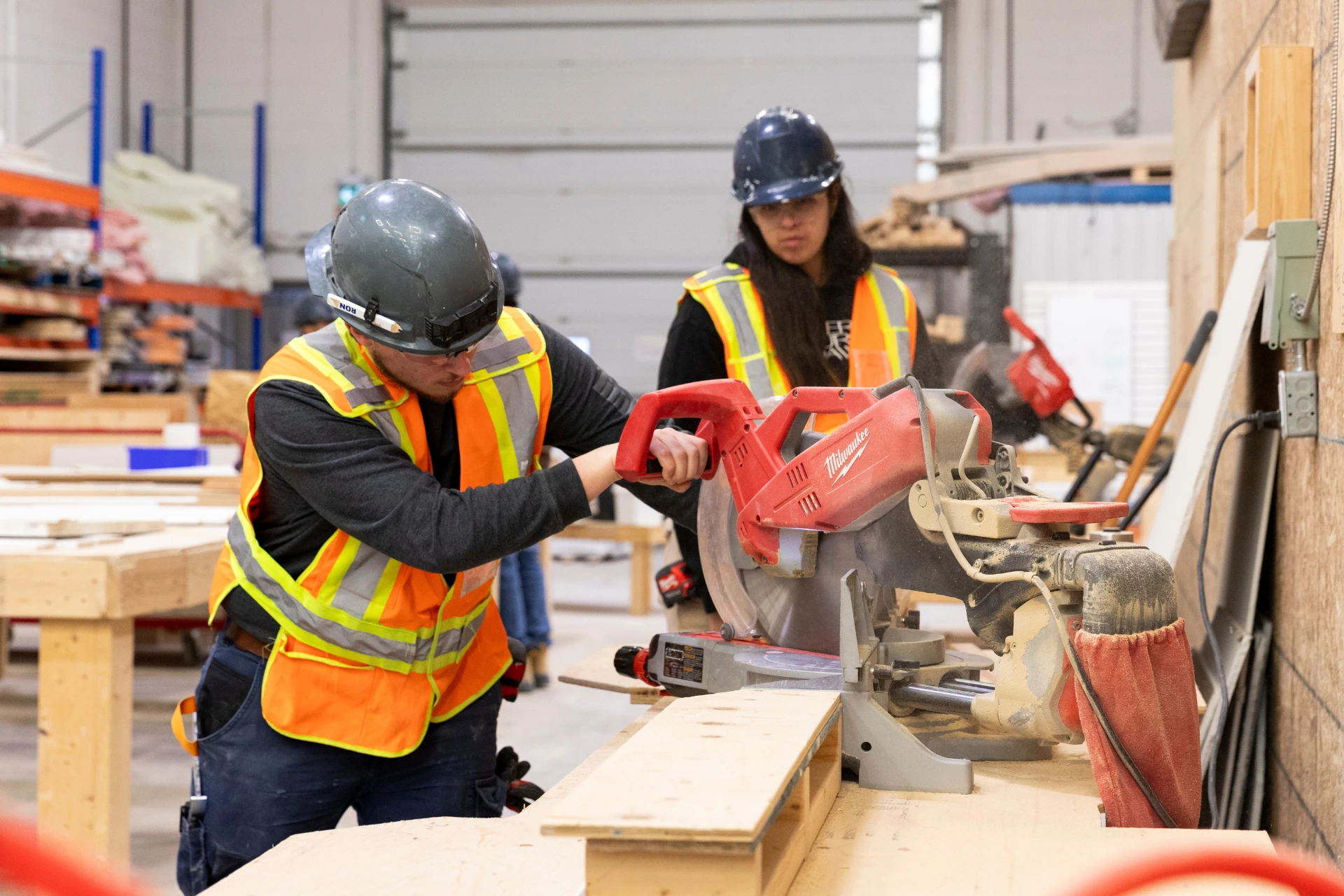
Two Skilled Trades College of Canada Students work with a circular saw

Rough Carpentry Skills

​​Rough carpentry requires a mix of technical knowledge, strength, and precision. Key skills include:

  • Blueprint reading: Rough carpenters must interpret blueprints to ensure the framework aligns with design specifications and building codes, protecting structural integrity.
  • Precise measuring: The stability and support necessary for walls, floors, and roofs depend on correct dimensions. Mistakes can be costly, making accurate measurement essential.
  • Heavy-duty tools: Rough carpenters rely on tools like hammers, saws, nail guns, and levels to build quickly and safely. Because nail guns can be hazardous, proper handling and safety training are crucial.

Once the structural framework is complete, the focus shifts from strength and structure to detail and design. This is where a home starts to feel finished, not just built.

What is Finish Carpentry?

Finish carpentry focuses on the final phases of woodwork, where detail, alignment, and appearance matter most. Once the framework is complete, finish carpentry begins, taking the project from functional to polished.

Finish carpentry is about creating a visually appealing interior by installing details that homeowners see and use every day. This includes building cabinets and shelving, installing flooring, trim, and mouldings, and fitting doors and windows.

In short, finish carpentry is the detailed craftsmanship and final touches that complete a space.

Focus of Finish Carpentry

Finish carpenters work on the interior details that elevate a home’s appearance. Their work includes:

  • Installing cabinets: Finish carpenters install built-in storage such as custom cabinets, shelving, and closets in kitchens, bathrooms, and other spaces.
  • Trim and moulding: This involves installing trim and moulding, such as baseboards, crown moulding, and wainscoting, to sharpen interior details.
  • Doors and windows: Finish carpenters hang doors and fit window frames to complete the space
A Skilled Trades College of Canada Student works on finish carpentry for a construction project

Finish Carpentry Skills

Finish carpentry demands patience and precision. From moulding to cabinetry, detail work must be exact. Key skills include:

  • Precision: Finish carpenters make accurate cuts that contribute to symmetry and high-quality results. They must ensure everything aligns cleanly with foundational components.
  • Creativity: Finish carpenters often help bring a client’s vision to life through custom details and design. This type of carpentry is both art and science.
  • Proficiency with fine tools: These tradespeople master tools such as chisels and mitre saws to achieve smooth finishes and precise angles. Hand-finished carpentry also involves careful fitting, sanding, and fine tool work.

When evaluating the key differences between rough carpentry vs finish carpentry, it’s helpful to view finish carpenters as the experts who provide the final touches that make a construction project feel complete and tailored.

Who Makes a Good Carpenter?

 While all carpenters share core skills, choosing between rough carpentry vs finish carpentry depends on your strengths and work style. Understanding how both roles fit together can help you decide whether you prefer structural work or fine detail work.

For Rough Carpentry: Strong, Problem-Solving Team Players

Rough carpentry often requires outdoor work and physically demanding tasks, as well as large tools and high stamina. Rough carpenters must be comfortable lifting heavy lumber, climbing scaffolding, and working on ladders in varied conditions.

A rough carpenter installs beams and posts, placing supports to ensure the building’s structural soundness. They must be strong problem-solvers ready to address unexpected structural challenges and on-site issues

Lastly, team-oriented thinking is a must. Working as a rough carpenter usually means working with others. So if you sign up for this gig, you must think and act like a team player.

For Finish Carpentry: Creative, Patient, Independent Workers

If you enjoy detail-oriented work and creative projects, finish carpentry may be the ideal path for you. It requires patience, symmetry, and meticulous attention to detail for precise craftsmanship. 

And while rough carpentry is often crew-based, finish carpentry often involves more solo work, making it suitable for independent workers.

Two Skilled Trades College of Canada students work on framing, a kind of rough carpenter

Rough and Finish Carpentry Comparison

To help you decide which path fits your goals, here’s a quick breakdown of the key differences between these two essential trades.

Feature Rough Carpentry Finish Carpentry
Primary Goal Structural integrity and creating the building’s “skeleton” Final touches and creating a visually appealing interior fit to client's preferences
Common Tasks Framing walls, roofs, and floors Installing trim, crown moulding, and custom cabinets
Materials Wood, steel, and plywood Fine woods, veneers, and flooring, and decorative trim
Core Tools Saws and nail guns for speed and power Precise tools like chisels and mitre saws
Work Environment Often outdoors, labour-intensive, and typically requires stamina Indoors, requires precision, patience, and artistry

Key Takeaways

  • Rough carpentry builds the framework, while finish carpentry completes the interior details.
  • Rough carpentry includes framing walls, floors, and roofs to ensure stability from the start.
  • Rough carpenters protect structural integrity by working from blueprints and ensuring a safe foundation.
  • Finish carpenters handle trim, mouldings, cabinets, doors, and windows to create a finished look.
  • Rough carpentry uses heavy-duty tools like saws and nail guns, while finish carpentry requires fine tools like chisels and mitre saws.
  • Skilled Trades College of Canada offers 12-week programs with an 80:20 hands-on ratio to build career-ready skills in both areas.

FAQs About Rough vs Finish Carpentry

Rough carpentry involves laying the groundwork and creating the "skeleton" of a building. It focuses on structural integrity and strength, ensuring that walls, roofs, and floors are structurally sound to support the rest of the build.

Finish carpentry means the final stage of carpentry work, where finish carpenters focus on trim, mouldings, cabinetry, doors, and other finishing details after the framework is complete.

Carpentry levels progress from pre-apprenticeship to journeyperson status. At Skilled Trades College of Canada, our 12-week program builds carpentry skills through an 80:20 hands-on ratio, preparing you to enter the industry and succeed in a construction project.

Carve Your Path with the Skilled Trades College of Canada

Whether you’re interested in rough carpentry and wall framing or you’re drawn to finish carpentry and interior detail work, now is the time to get started. Skilled Trades College of Canada is here to help you take the first steps toward a high-demand career in the trades.

Our pre-apprenticeship programs are designed to equip you with the skills to pay the bills. With an 80:20 hands-on to classroom ratio, students gain practical experience and career confidence. In just 12 weeks, you can become job-ready in a fraction of the time compared to traditional colleges.

Contact us today to speak to a program advisor or book a campus tour to see our facilities in person!

Written by

Mike DiDonato

Chief Operating Officer

Mike Di Donato serves as the Chief Operating Officer at Skilled Trades College of Canada. With 25 years of expertise in business development, partnerships, and enhancing organizational efficiency, he has dedicated a decade to growing the college from one modest campus to six state-of-the-art locations across the Greater Toronto Area. Mike has played a strategic role in forging impactful partnerships—most notably the Building Champions Scholarship in collaboration with NBA Rookie of the Year Scottie Barnes. He has also spearheaded significant marketing initiatives, including establishing STC as the Official Partner of UFC, with visible branding integrations at UFC 297 and the launch of scholarship programs tied to UFC events.

View our Courses

Get Job-Ready
in 12 weeks

9,281+

LIVES CHANGED

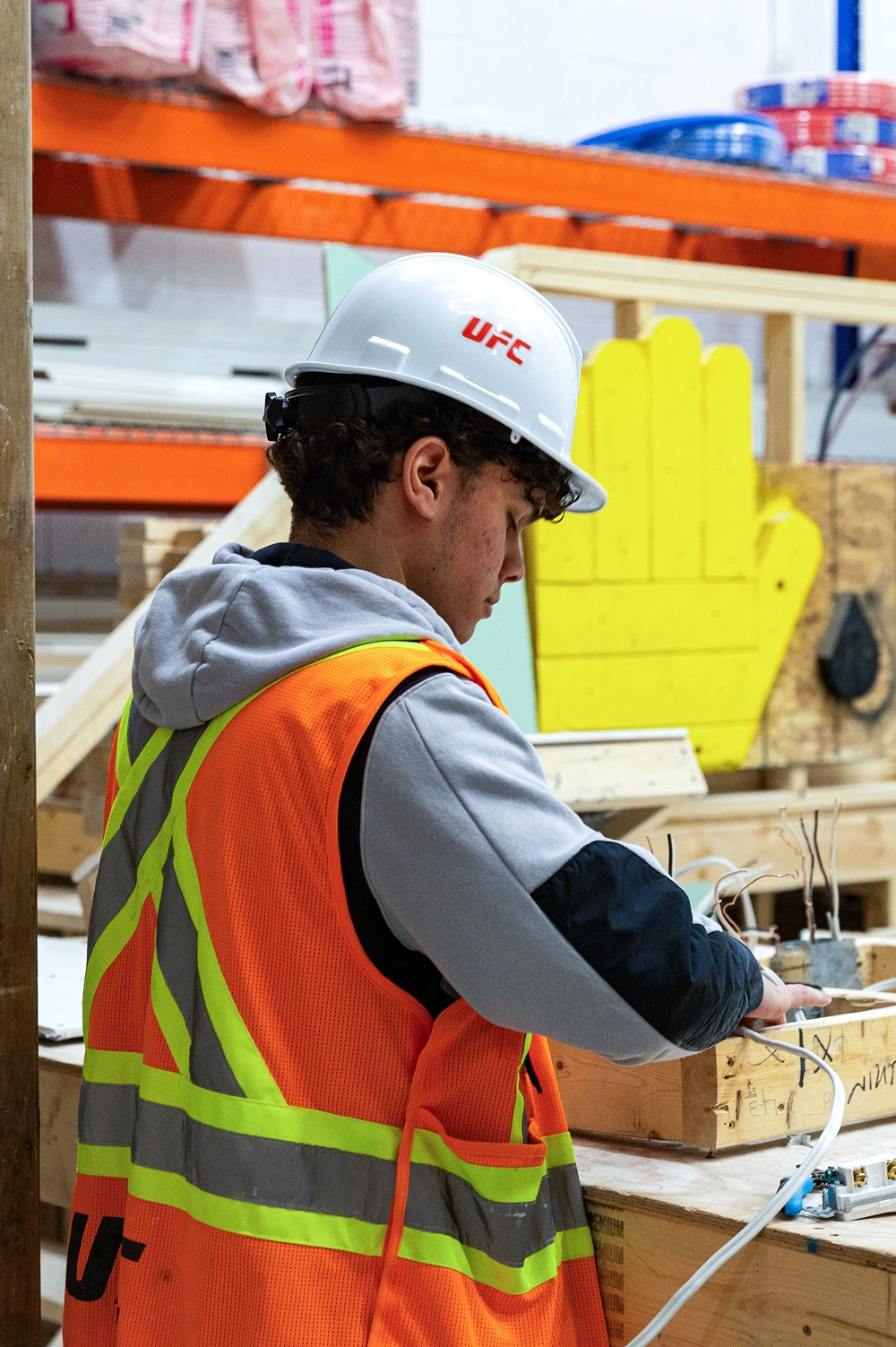
Young man wearing a UFC hard hat and orange safety vest working with electrical wires in a workshop.

12,481+

WIRES PULLED

12,481+ Wires Pulled - Skilled Trades College

85,382+

2X4'S CUT

85,382+ 2X4'S Cut - Skilled Trades College

9,756+

PIPES LAYED

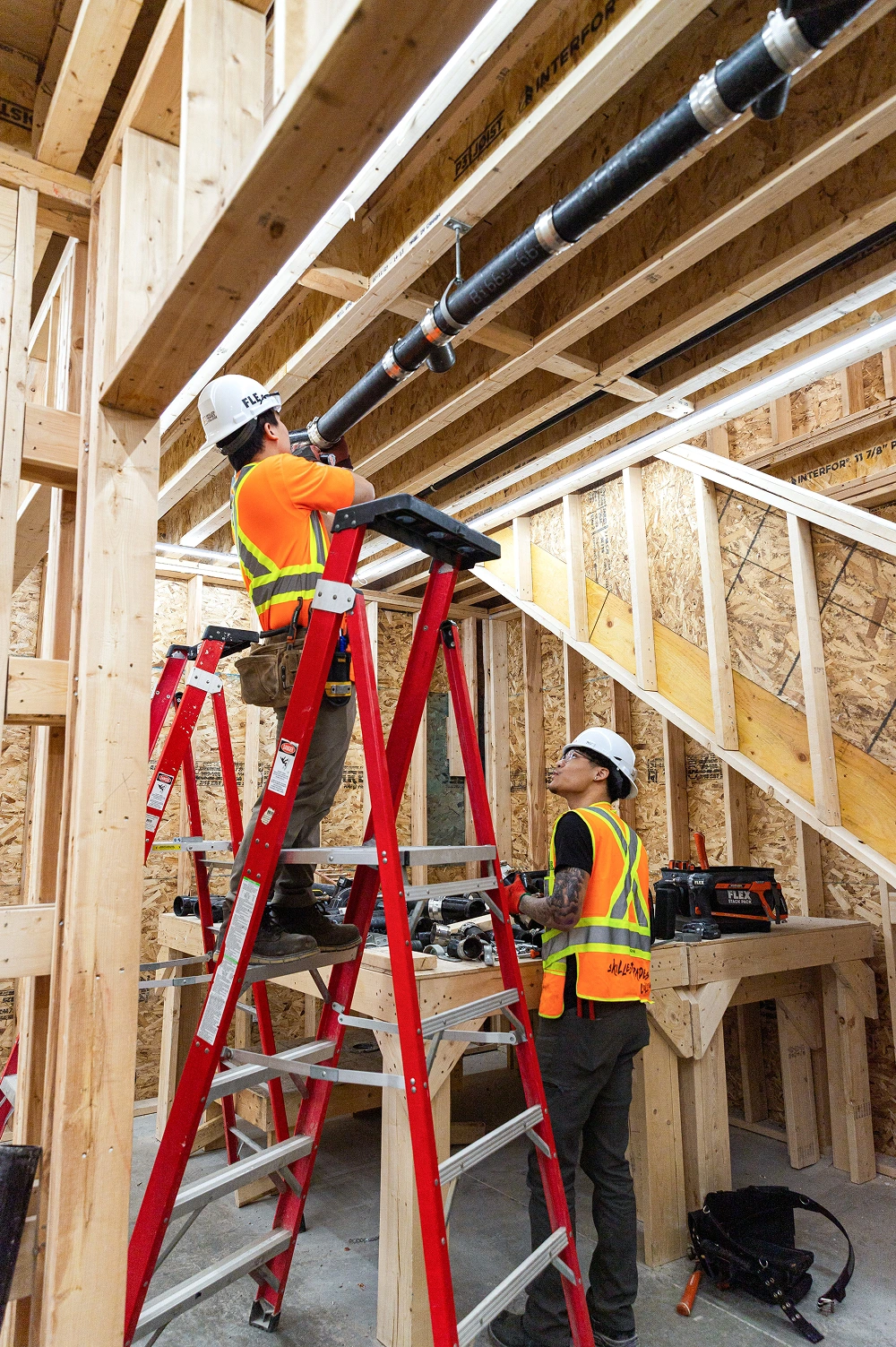
Two construction workers wearing orange safety vests and white helmets installing black pipes in a wooden framed building interior.

9,281+

LIVES CHANGED

Young man wearing a UFC hard hat and orange safety vest working with electrical wires in a workshop.

12,481+

WIRES PULLED

12,481+ Wires Pulled - Skilled Trades College

85,382+

2X4'S CUT

85,382+ 2X4'S Cut - Skilled Trades College

9,756+

PIPES LAYED

Two construction workers wearing orange safety vests and white helmets installing black pipes in a wooden framed building interior.

9,281+

LIVES CHANGED

Young man wearing a UFC hard hat and orange safety vest working with electrical wires in a workshop.

12,481+

WIRES PULLED

12,481+ Wires Pulled - Skilled Trades College

85,382+

2X4'S CUT

85,382+ 2X4'S Cut - Skilled Trades College

9,756+

PIPES LAYED

Two construction workers wearing orange safety vests and white helmets installing black pipes in a wooden framed building interior.