Contact Us

Thank you! Your submission has been received!
Oops! Something went wrong while submitting the form.
Close Icon

Enroll Now

get Job-Ready in only
Twelve Weeks

Certifications Received

Arrow Icon

Working at Heights

Arrow Icon

First aid & CPR

Arrow Icon

Lockout & Tagout

Arrow Icon

WHMIS

What I get

Arrow Icon

Job Ready Skills

Arrow Icon

Small Class Size

Arrow Icon

80% Hands on Learning

How to Become a
plumber

How To Become A Plumber - Skilled Trades College
What Is A Plumber - Skilled Trades College

What Is a Plumber?

Plumbing Pre-Apprenticeship Course

Get Your High School Diploma, GED, or Equivalent

1

Complete Pre-Apprenticeship Training

2

Plumbing Pre-Apprenticeship Course

Gain Work Experience (Plumbing Apprenticeship)

3

Get Your License

4

Plumbing Pre-Apprenticeship Course
View All Courses
Get Your High School Diploma - Skilled Trades College

Roadmap to Becoming a Plumber in Ontario

Launching a rewarding plumbing career requires passing through precise professional milestones. This definitive roadmap outlines every critical phase you must navigate to securing your provincial trade license and beyond.

1

Get your high school diploma or GED equivalent

2

Fast-track your hands-on skill development through a 12-week plumbing course at Skilled Trades College

3

Find a licensed plumbing contractor or union to hire and sponsor you as an apprentice & register your training agreement

4

5

Become a licensed plumber after passing the C of Q certification exam

6

Expand your credentials with a Red Seal certification and work anywhere in Canada

Plumber Salary In Canada - Skilled Trades College

Plumber Salary in Canada

Plumbing Pre-Apprenticeship Course
Intro to Home Renovation Course
HVAC Pre-Apprenticeship Course

Benefits of Becoming a Plumber

Career Growth Opportunities

Diverse Employment Opportunities

Financial Independence & Flexibility

Exceptional Financial Stability

Help Communities & Drive Development

Pride & Quality of Work

Benefits of Becoming a Plumber - Skilled Trades College

Kickstart Your Trades Career with Hands-On Training at STC!

Discover how to become a plumber in Ontario by enrolling in our intensive, 12-week pre-apprenticeship training program. At Skilled Trades College, we provide the practical, foundational skills you need to secure a sponsor, accumulate your apprenticeship hours, and fast-track your journey toward challenging the provincial exam.

Start your path to becoming a highly paid, fully certified plumber and open doors to earning your national Red Seal endorsement. Your career in the trades begins right here!

FAQs

How long does it take to become a plumber?

In Ontario, it typically takes approximately 4-5 years to fully transition from a beginner to a licensed plumber. This encompasses the mandatory 9,000 total training hours required by Skilled Trades Ontario.

How hard is it to become a plumber?

Becoming a plumber requires you to be physically fit, dedicated, and possess sharp critical-thinking abilities. While mastering advanced plumbing codes, construction drawings, and geometric calculations can be challenging, completing a structured foundational program like Skilled Trades College's pre-apprenticeship plumbing training makes the overall learning curve much more manageable.

Do I need to be good at math to be a plumber?

Yes, basic math is a daily requirement for plumbers. You don't need advanced calculus, but you will routinely use practical geometry, fractions, and algebra to calculate pipe angles, offsets, water pressure differentials, and material measurements. Pre-apprenticeship programs are excellent for teaching you the exact trade math formulas you'll need on the job!

Is it possible to get into plumbing with no experience?

If you have zero prior experience, the most effective path is to enroll in a pre-apprenticeship program. Practical training teaches you basic safety protocols, tools, foundational plumbing systems and plumbing theory, giving you the hands-on confidence and portfolio necessary to attract an employer sponsor.

What is the difference between a residential and commercial plumber?

Residential plumbers work primarily in homes and small apartments, dealing with standard water pipes, water heating systems, and household plumbing fixtures. Commercial plumbers work in large structures like hospitals or malls, managing massive, multi-story industrial piping systems, commercial waste removal, and public water infrastructure.

Get Job-Ready
in 12 weeks

9,281+

LIVES CHANGED

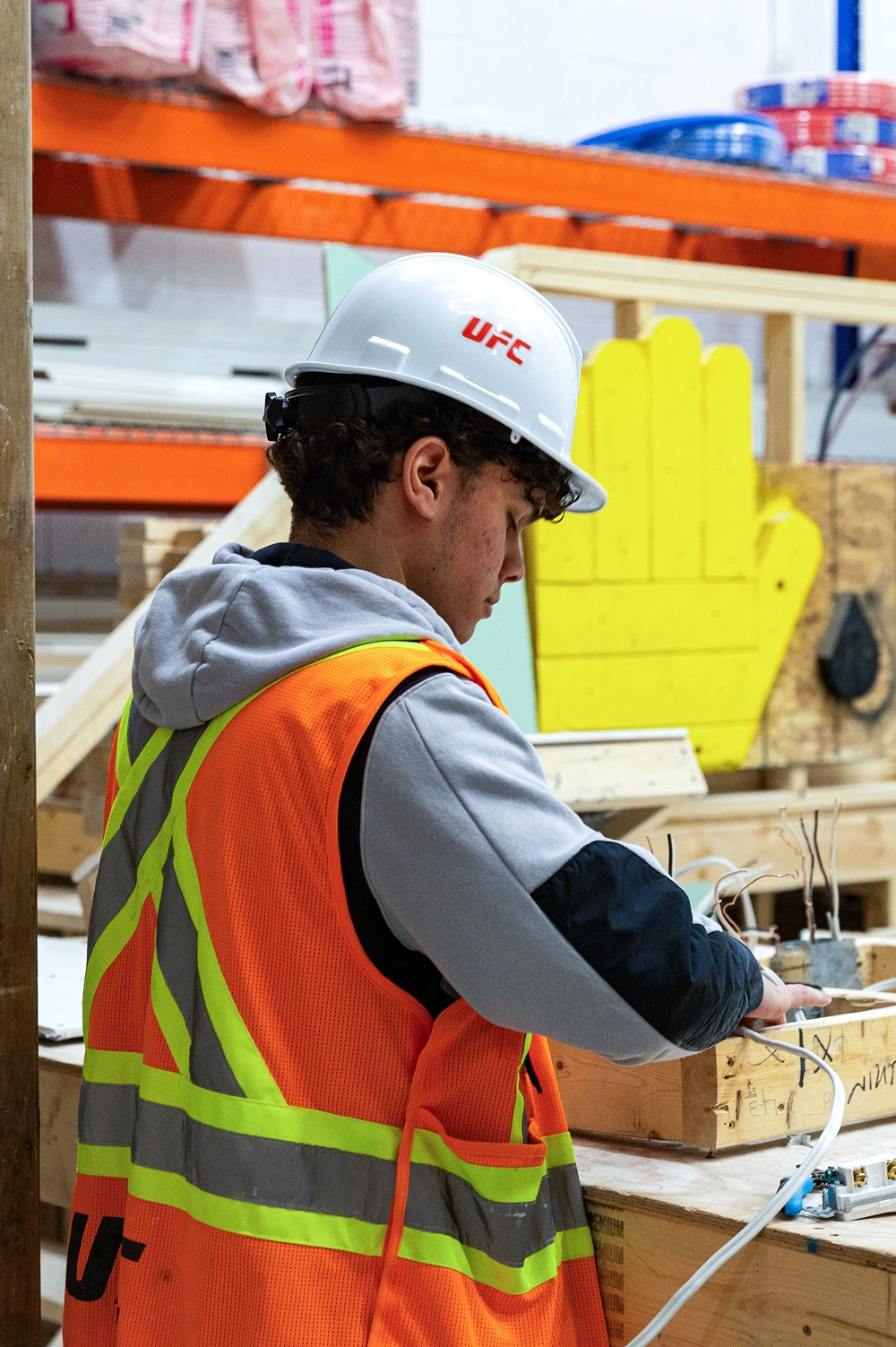
Young man wearing a UFC hard hat and orange safety vest working with electrical wires in a workshop.

12,481+

WIRES PULLED

12,481+ Wires Pulled - Skilled Trades College

85,382+

2X4'S CUT

85,382+ 2X4'S Cut - Skilled Trades College

9,756+

PIPES LAYED

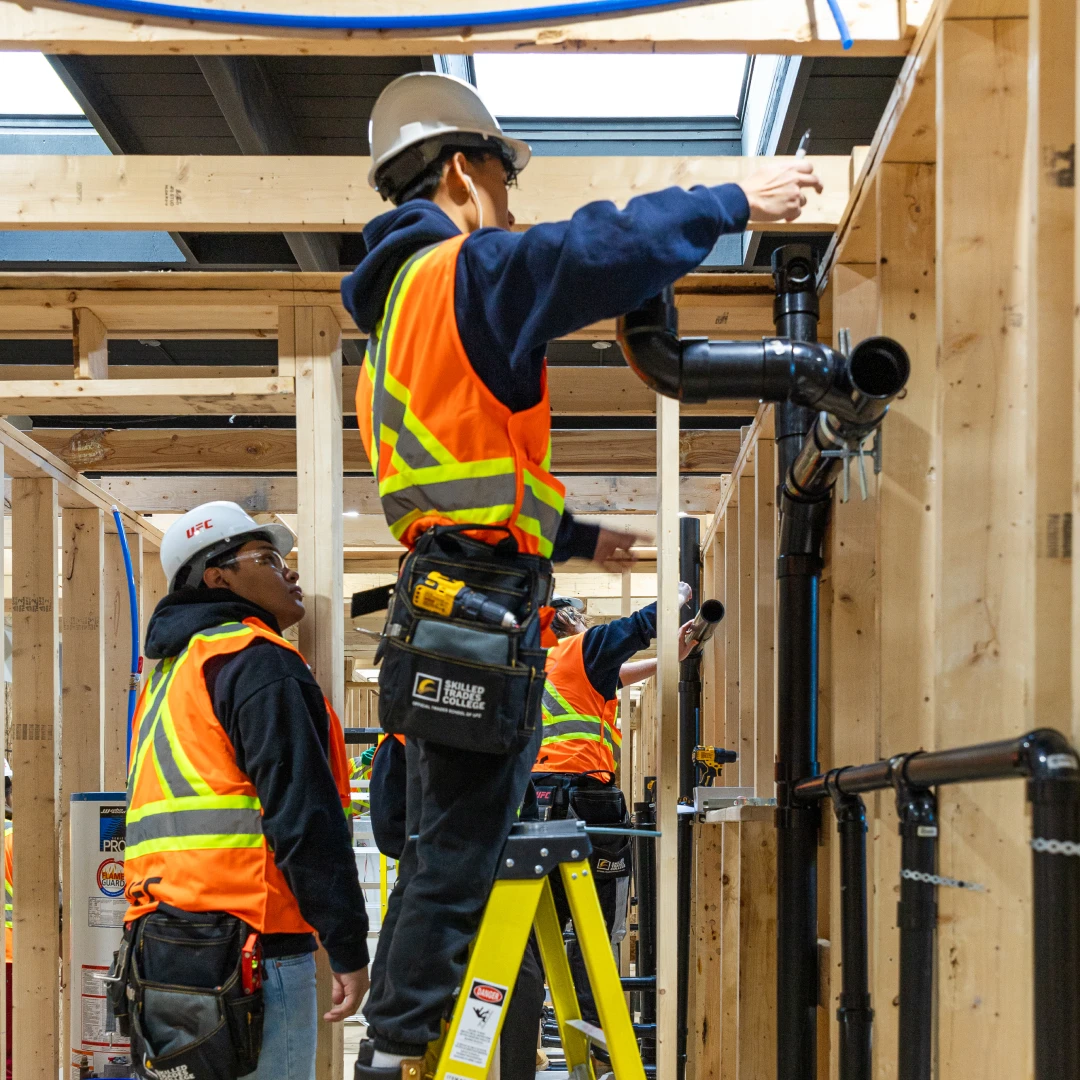
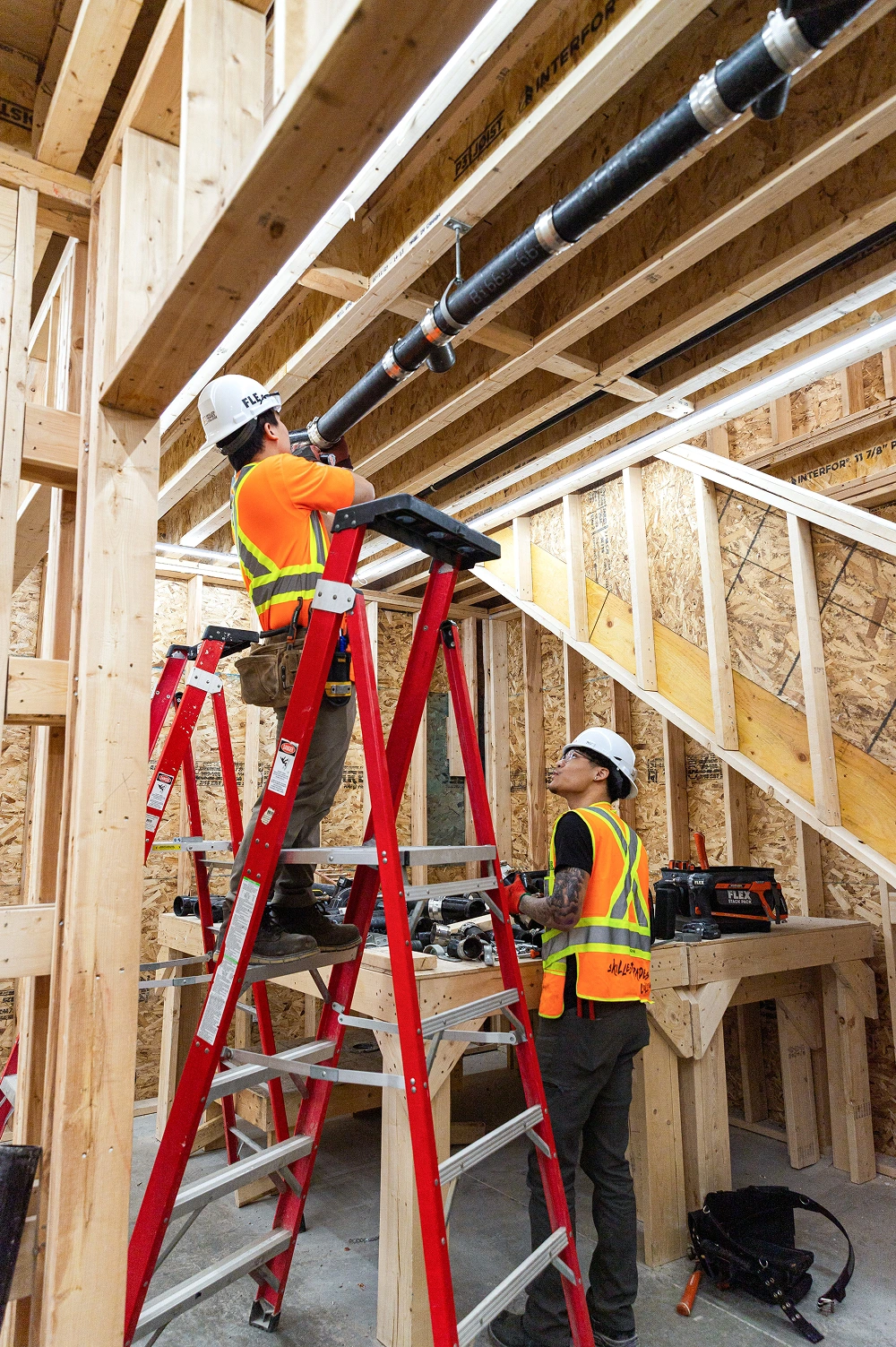
Two construction workers wearing orange safety vests and white helmets installing black pipes in a wooden framed building interior.

9,281+

LIVES CHANGED

Young man wearing a UFC hard hat and orange safety vest working with electrical wires in a workshop.

12,481+

WIRES PULLED

12,481+ Wires Pulled - Skilled Trades College

85,382+

2X4'S CUT

85,382+ 2X4'S Cut - Skilled Trades College

9,756+

PIPES LAYED

Two construction workers wearing orange safety vests and white helmets installing black pipes in a wooden framed building interior.

9,281+

LIVES CHANGED

Young man wearing a UFC hard hat and orange safety vest working with electrical wires in a workshop.

12,481+

WIRES PULLED

12,481+ Wires Pulled - Skilled Trades College

85,382+

2X4'S CUT

85,382+ 2X4'S Cut - Skilled Trades College

9,756+

PIPES LAYED

Two construction workers wearing orange safety vests and white helmets installing black pipes in a wooden framed building interior.