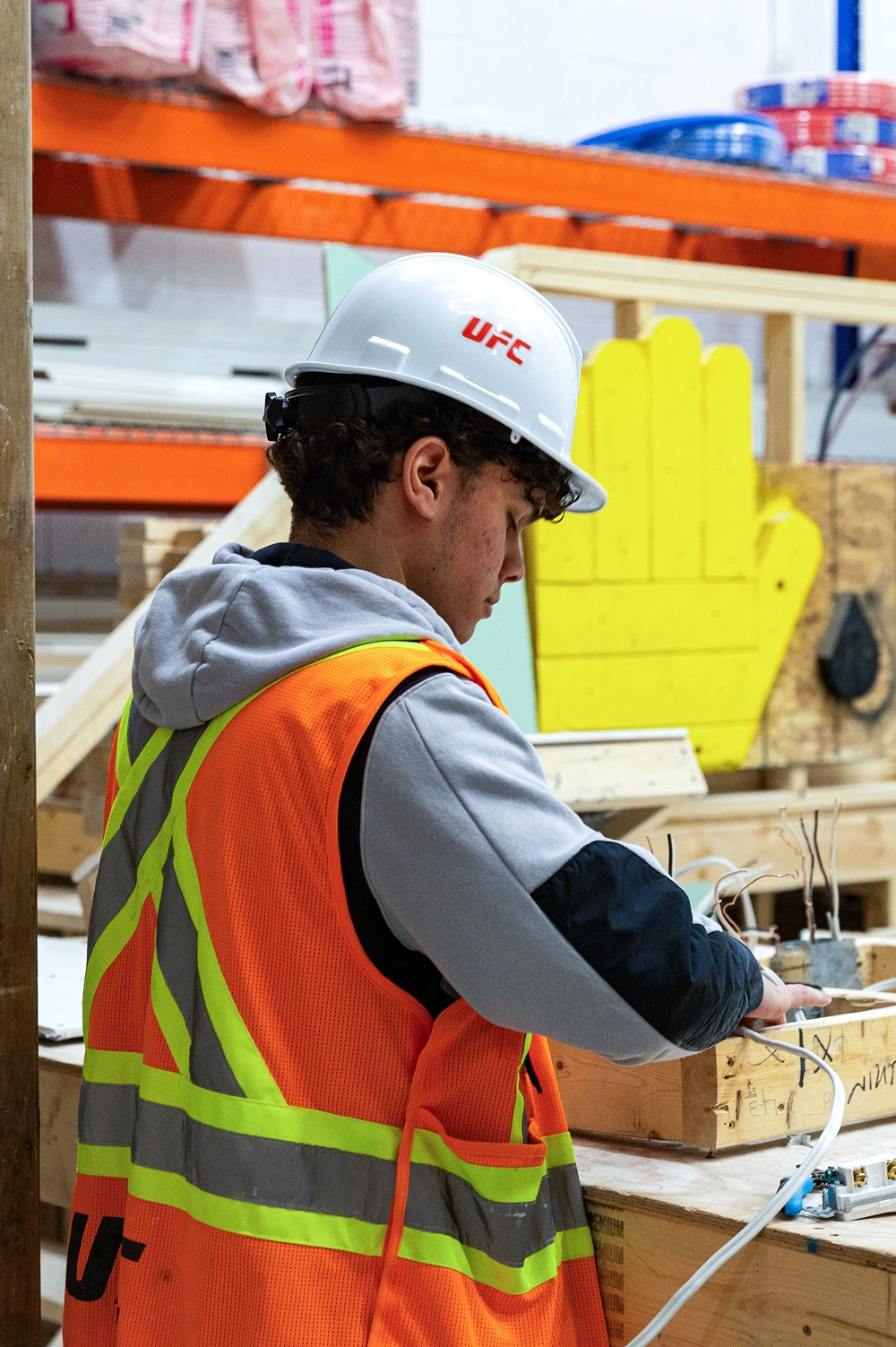
Apprenticeships function as an “earn while you learn” program, where trades students receive training through a combination of on-the-job training and in-school instruction. Apprentices study under certified journeypersons, gain skills, and complete training hours that lead to certification. Programs are provincially regulated in Canada.
Apprenticeships are the gold standard for learning skilled work. Today, they remain the backbone of “hands-on” industries like construction, manufacturing, and automotive service. Not only do they enable aspiring trades professionals to acquire skills, earn wages, and obtain credentials, but they also ensure that industries maintain high standards of safety, quality, and expertise.
So, how do apprenticeships work in practice today? Let’s find out!
What Are Apprenticeships?
Apprenticeships are a form of post-secondary training, but instead of spending all your time in a classroom, you learn directly on the job. They combine paid, hands-on experience with technical training at an approved college or training provider.
What Is the Difference Between OJT and Apprenticeship?
On-the-job training (OJT) is informal work experience, while an apprenticeship is a structured, government-recognized training program that leads to certification.
Generally, OJT students learn practical skills or tasks specific to one job or company. Meanwhile, apprentices follow a standardized curriculum focused on skills development that leads to becoming a fully qualified journeyperson in their chosen trade.
Feature
On-the-Job Training (OJT)
Apprenticeship Programs
Purpose
Helping students or new employees apply skills in a real work environment.
Training individuals for a specific skilled trade and earning certification.
Timing
Can happen during a college or vocational program (as a practicum or co-op) or after graduation as part of job onboarding.
Can happen after high school, following pre-apprenticeship programs, or later in life as a career shift.
Begins when an individual registers with their provincial apprenticeship authority and starts working under certified skilled tradespeople.
Structure
Informal and varies by employer or school program. Training focuses on practical experience.
Formal, structured, and regulated by provincial standards with defined training hours and classroom instruction.
Pay
May or may not be paid if part of a school curriculum; must be paid if part of employment.
Paid employment; wages may increase as apprentices gain experience.
Credential
May count as work experience or school credit.
Leads to a Certificate of Qualification (C of Q); potential Red Seal trade qualification (in select trades).
Supervision
Company trainer, manager, or instructor.
Certified journeyperson or master tradesperson.
Examples
Co-op placements for college students, practicum for healthcare assistants, or entry-level employee training.
Electrician, plumber, HVAC, or carpenter apprenticeship programs.
How Does an Apprenticeship Work in Canada?
An apprenticeship is a post-secondary training and employment program rolled into one. Just like applying for college or a job, you must meet specific requirements and go through an application process, then complete the required hours.
Once completed, apprentices can then challenge the certification exam (if necessary) to become licensed journeypersons. The exact training, duration, and requirements may vary per trade and province, but they all follow the same general structure:
These programs operate through a signed training agreement involving the apprentice (you), the sponsor or employer, and the provincial or territorial apprenticeship authority.
Apprentices train under certified journeypersons who supervise their work and sign off on completed competencies.
Apprenticeship training combines on-the-job experience (80%) with technical classroom training (20%).
While apprenticeship programs require specific hours of practical work (3,000 to 9,000), the training is competency-based. You advance by demonstrating essential skills, not just logging time.
Apprentices record their hours, tasks, and completed competencies in a logbook, which is reviewed by their supervising journeyperson.
Trades and apprenticeship training programs in Canada can be classified into compulsory and non-compulsory:
Compulsory trades require certification to legally work in that trade, regulated by provincial or territorial authorities, typically with mandatory apprenticeship programs and exams.
Non-compulsory trades don’t require certification, but they still offer apprenticeship programs and credentials.
In Canada, apprenticeship training programs are regulated by each province and territory, meaning requirements, wages, and training delivery can vary. However, the Provincial-Territorial Apprentice Mobility Protocol and Agreement allow apprentices to move across Canada without losing their progress or certification status.
Your Apprenticeship Journey: Step-by-Step
Here’s how a typical apprenticeship journey works from start to certification:
1. Choose Your Trade
There are more than 300 designated trades from which to choose in Canada. Completing an apprenticeship typically takes two to five years, making it a significant commitment. Take the time to research different options and find one that matches your skills and interests.
Tip: Different trades have different requirements. We recommend checking your province’s apprenticeship authority website to learn about entry requirements, certifications, and available training programs for your chosen trade.
2. Enrol in a Pre-Apprenticeship Program
Apprenticeships can be highly competitive, especially for in-demand trades, such as electrical and HVAC. Most employers prefer sponsoring candidates with basic trade knowledge and hands-on skills.
So, while it’s technically possible to get hired as an apprentice with zero experience and know-how, your chances are that much higher with the proper training and certifications. Pre-apprenticeships are short, intensive training programs that help you prepare for an apprenticeship.
They:
Teach you safety procedures, tool use, and core technical skills
Provide hands-on training in a workshop setting
Help you understand industry standards and employer expectations
Provide certifications like First Aid, WHMIS, and Working at Heights that strengthen your applications
Offer resume review, career guidance, and interview support
Help you test out whether the trade is the right fit for you
3. Find an Apprenticeship
To become an apprentice, you must find an employer willing to sponsor your training. You can find apprenticeships through:
Online job boards (LinkedIn, Foundit, Indeed, Canada Job Bank, etc.)
Once you’ve secured your sponsor, you can register your apprenticeship with the appropriate provincial or territorial apprenticeship authority. The registration process typically involves completing and submitting an apprenticeship application form, along with a signed training agreement.
5. Get Financial Aid
Canada offers several grants and funding programs for skilled trades and apprenticeships. These include:
Canada Apprentice Loan
Apprenticeship Incentive Grant (AIG)
Apprenticeship Completion Grant (ACG)
6. Complete Apprenticeship
Apprenticeship programs in Canada take two to five years to complete. Just as you register your program through the provincial authority, you also track and report your progress with them.
Once you have completed your required training and work hours, you must file your Apprenticeship Completion with the relevant authorities. In Ontario, the process goes like this:
Inform your sponsor about your intention to complete the program. Prepare your documents:
Apprenticeship Training Standard Logbook or Schedule of Training, and
Notice of Completion (for schooling requirements).
Fill out and sign the Apprenticeship Completion Form (both you and your employer must sign!).
Submit the form to Skilled Trades Ontario through email or mail.
Wait for Skilled Trades Ontario to review your form.
Receive your Certificate of Apprenticeship.
What Happens During an Apprenticeship?
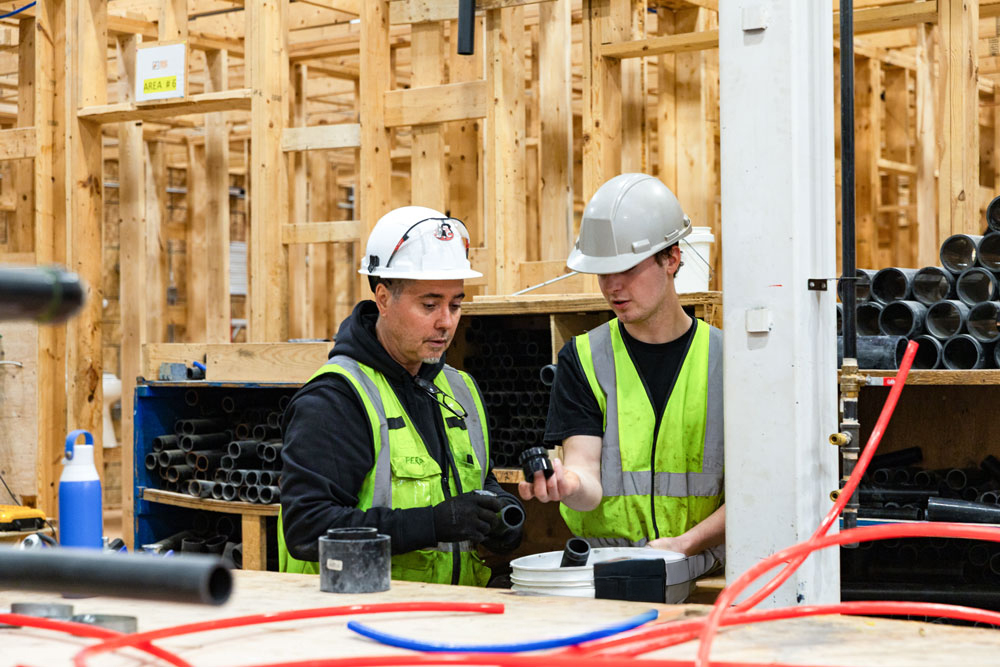
During an apprenticeship, you’ll split your time between working under supervision and attending a trade school. Typically, apprentices work for a year or more, then take eight to 12 weeks of in-class training.
7. Pass the Journeyperson Exam
The Certificate of Apprenticeship is proof that you completed your apprenticeship program, but it’s not the same as certification to legally work as a journeyperson in many trades. You must take the certifying exam to earn your Certificate of Qualification.
In compulsory trades, the Certificate of Qualification must be renewed annually.
Non-compulsory trades may or may not offer a certifying exam. In cases they do, you mostly don’t need to renew the qualification.
8. You’re Now a Journeyperson!
As a certified journeyperson, you can now work in your trade without supervision! Depending on your trade, you may also take the Red Seal Exam, which, upon successful completion, provides a Red Seal endorsement.
This endorsement proves that your skills and knowledge align with the national standard. It adds extra mobility to your certification, allowing you to work anywhere in Canada.
Work full-time under the supervision of a certified journeyperson
Learn and practice trade-specific skills on real projects
Use industry-standard tools and equipment safely
Take direction from site supervisors and project managers
Document hours and competencies in your apprenticeship logbook
Travel to different job sites across your region
Follow workplace safety protocols and WHMIS requirements
Assist with installations, repairs, and maintenance work
Attend technical training sessions one to two times per year
Study trade theory, codes, and regulations (National Building Code, CEC, etc.)
Complete assignments, labs, and hands-on workshops
Prepare for and write level exams to progress through the program
Attend safety training (Working at Heights, First Aid, etc.)
Network with other apprentices and instructors
Access training resources through provincial colleges or union training centers
Return to work after each session with new knowledge to apply
Do You Get Paid If You’re an Apprentice?
Yes! A registered apprentice typically earns at least minimum wage or slightly above, depending on the trade and employer. Most start by earning a percentage of a journeyperson’s wage. Wage increases as you gain experience and complete training levels.
Many provinces impose an apprenticeship wage rate policy that outlines this step-by-step wage progression to ensure fair pay throughout the program.
For example, in Saskatchewan, employers must pay apprentices during the first half of their first year at no less than:
The minimum wage, or
40% of a newly qualified journeyperson’s hourly rate, whichever is higher.
Wages must then increase in roughly equal increments as the apprentice advances. By your final year, you’ll earn at least 90% of a journeyperson’s rate (except for construction electricians, who follow a separate policy).
So, if a Saskatchewan journeyperson makes $40 per hour, you might start at $16 and finish at $36.
In Summary
In an apprenticeship, beginners work beside masters until they become masters themselves.
These programs combine on-the-job training (80%) with classroom instruction (20%).
Apprenticeships are structured programs leading to recognized credentials, unlike OJT.
Apprentices earn wages that increase in proportion to their skills.
They advance under a certified journeyperson to earn a Certificate of Qualification.
Pre-apprenticeship programs provide hands-on training and certifications, enhancing candidates' job readiness for apprenticeships.
Financial support is available for apprentices through programs like the Canada Apprentice Loan, AIG, and ACG.
After completing the required hours and training, apprentices take the journeyperson exam to earn certification.
Get Apprenticeship-Ready in 12 Weeks
How do apprenticeships work? Discover the truth for yourself by preparing in the right way.
Skilled Trades College of Canada's pre-apprenticeship programs give you what employers want: certifications, competence, and confidence on day one. We've trained over 9,000 graduates using real tools, real techniques, and real job-site scenarios that prepare you for success.
We know what it takes to get you hired. Start your trades career with us. Enrol now!
Written by
Mike DiDonato
Chief Operating Officer
Mike Di Donato serves as the Chief Operating Officer at Skilled Trades College of Canada. With 25 years of expertise in business development, partnerships, and enhancing organizational efficiency, he has dedicated a decade to growing the college from one modest campus to six state-of-the-art locations across the Greater Toronto Area. Mike has played a strategic role in forging impactful partnerships—most notably the Building Champions Scholarship in collaboration with NBA Rookie of the Year Scottie Barnes. He has also spearheaded significant marketing initiatives, including establishing STC as the Official Partner of UFC, with visible branding integrations at UFC 297 and the launch of scholarship programs tied to UFC events.


.webp)
.webp)