Which Trade Is Right For Me? 7 Questions to Ask Yourself to Know Which Trade to Pursue


Published On
2026-07-22
Untrained candidates increase the cost of a bad hire through supervision hours, material waste, safety incidents, high turnover, and recruitment costs. Hiring pre-apprenticeship graduates with certifications and hands-on training reduces those expenses and gets crews to full productivity faster.
Most contractors can rattle off an hourly wage rate without hesitation. Far fewer can explain the real price of a poor hire once that worker is actually on site. It surfaces as extra supervision time, wasted materials, safety issues, rework and callbacks, plus the hidden cost that lingers when undertrained employees quit.
For electrical, plumbing, HVAC, and home renovation crews across Ontario, that math adds up fast, and most shops never track it. At Skilled Trades College of Canada, we see the pattern play out across every one of those trades with contractors.
A bad hire drains profit through five costs most contractors never track: extended supervision, wasted materials, safety liability, rework, and early turnover.
An untrained hire can’t be left alone on a task, which means a licensed tradesperson does two jobs at once: their own and that new employee's training.
If a journeyperson earning $45 an hour spends even 5 extra hours a week supervising, that’s over $11,000 in lost productivity from one crew member alone in a year. That lost time is an indirect cost most accounting software never captures.
Inexperienced workers mismeasure and miscut lumber, crank down fittings too hard, and improperly handle wire, conduit, and copper far more often than trained apprentices ever would. Even a seemingly small 5% to 10 % material waste rate can silently chip away at a project’s margin, especially with today’s elevated material costs.
This is the cost most contractors underestimate, and it's tied to construction site safety standards on every job. Employees without training in Working at Heights, Workplace Hazardous Materials Information System (WHMIS), or Lockout/Tagout are, by definition, higher-risk hires.
One serious incident involving an untrained worker doesn’t just mean a claim. WSIB uses your claims costs and number of allowed claims over a six-year rolling window, meaning a serious injury can raise your premium for years before it drops off your record
A job done wrong the first time costs more the second time, in both labour and materials. Beyond the direct costs of fixing the work, callbacks damage the thing contractors depend on most: their reputation and customer relationships.
Turnover is a persistent challenge in construction, and untrained new hires are the most likely to wash out early because they were never set up to succeed in the first place.
That triggers the entire hiring process and training costs all over again: job description, interviews, background checks, and onboarding costs.
Industry research puts the average cost of a bad hire at around $17,000, factoring in recruitment, training, lost productivity, and ramp-up losses.
Employee turnover costs climb even higher industry-wide, ranging from 50% to 200% of an employee's annual salary, depending on the role and the amount of institutional knowledge that walks out the door with them.
None of that includes the harder-to-quantify hit to team morale, employee engagement, and company culture when existing team members are stuck covering for a hiring mistake.

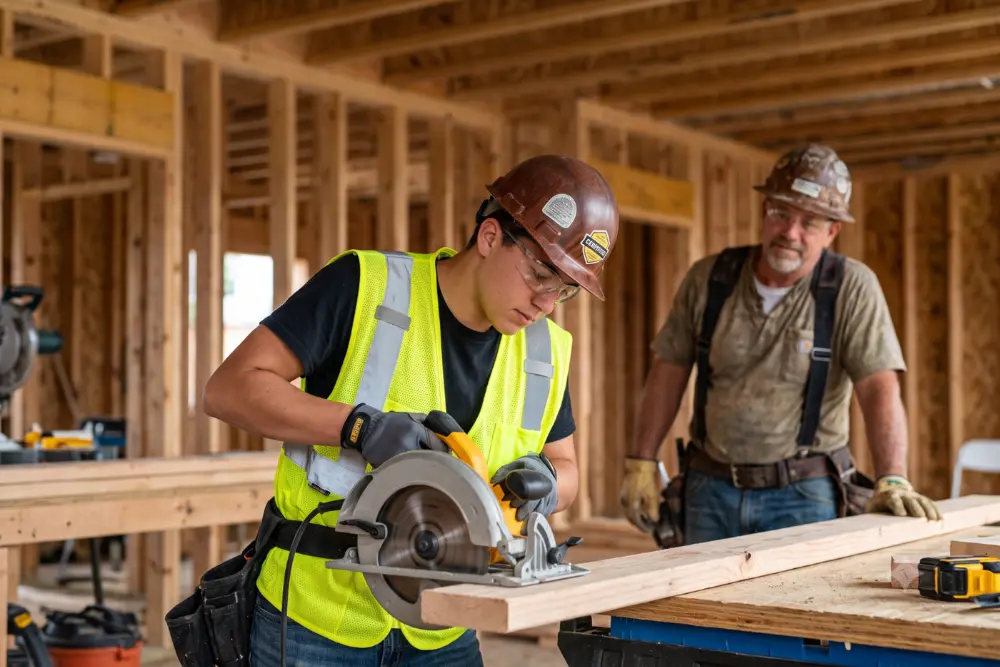
Image Source: Gemini 2026
Here’s what most cost breakdowns miss: a bad hire doesn’t just cost more in their first month. They slow down everyone around them for months afterward.
Your best people spend less time producing and more time correcting. Project timelines stretch, and morale and employee engagement erode when experienced tradespeople feel like they’re running a daycare rather than a job site.
This is exactly the gap a pre-apprenticeship program like ours at Skilled Trades College is built to close. Graduates arrive with their certifications already in hand, including Working at Heights, WHMIS, First Aid and CPR, and Lockout and Tagout, so week-one safety onboarding is already done before they show up.
They also arrive with 12 weeks of hands-on lab time under their belts, built on an 80:20 ratio of practical work to classroom instruction. That means fewer wasted materials, fewer supervision hours, and a much shorter runway to independent, productive work.
Because employment prep is baked into the program, these are candidates who understand what a real job site expects of them, not just the theory. It’s one of the simplest employee retention strategies out there: start with someone already built to stay.

Image Source: Gemini 2026
The true cost of a bad hire and of employee turnover is not a separate problem. They’re the same problem, showing up at different points in the job. Smart contractors already run exit interviews and watch for warning signs before an employee leaves. Fewer of them apply that same scrutiny to who they hire in the first place.
See the full list of certifications our graduates bring to the job and connect with our hiring team to start building a crew that costs less to onboard and delivers more from day one.

9,281+
LIVES CHANGED
12,481+
WIRES PULLED

85,382+
2X4'S CUT

9,756+
PIPES LAYED
9,281+
LIVES CHANGED
12,481+
WIRES PULLED
85,382+
2X4'S CUT
9,756+
PIPES LAYED
9,281+
LIVES CHANGED
12,481+
WIRES PULLED
85,382+
2X4'S CUT
9,756+
PIPES LAYED