How Ontario Apprenticeship Grants Fund the Path From Apprentice to Journeyperson

Published On

2026-08-19

Confident Ontario journeyperson smiling on a job site with an apprentice

Hiring an apprentice pays off across four years, not just one paycheque. Ontario apprenticeship grants, tax credits, and rising apprentice productivity steadily offset employer costs, while pre-apprenticeship training and stronger completion rates build toward a loyal, fully certified journeyperson hire.

Most employers price a new hire the way they'd price a piece of equipment: one number, paid once, done. But apprenticeship hiring doesn't work that way. 

The real return unfolds over four years, and the businesses that understand that timeline are the ones capturing every dollar of available support along the way.

If you're weighing the cost of bringing on an apprentice, the Ontario apprenticeship grant landscape changes the math significantly, and it's worth understanding before you write off the investment. Here's how Skilled Trades College of Canada can help you make sense of it.

Year 0: Why a Pre-Apprenticeship Grad Costs You Less From Day One

A raw hire needs weeks of orientation before they're safe on a job site, let alone useful. An STC pre-apprenticeship grad has already completed technical training and hands-on schooling, so the basics, from tool handling to site safety to reading a blueprint, are already covered.

That difference shows up fastest in your first 90 days. You're not paying someone to learn what a level is. You're paying someone who can start contributing to real tasks under normal supervision almost immediately, which means fewer wasted labour hours and a faster path to billable work for your business. 

Year 1: The Ontario Apprenticeship Grants That Offset Your Costs

This is where the four-year math shifts in your favour. Ontario, through Skilled Trades Ontario (STO) and the provincial ministry responsible for apprenticeship training, along with the federal government, has built a set of grants specifically to encourage employers to take on apprentices.

Depending on whether your apprentice is training in a Red Seal trade or a non-Red Seal trade, different programs and eligibility requirements apply. Some incentives are tied to registration and retention; others to completing levels of in-school training; and some come as a tax credit that employers can claim against apprentice wages. 

There’s also a tools grant to help offset the cost of equipment, and in some cases, interest-free loans or non-repayable financial support tied to skills development. Red Seal apprentices may also be able to access the Canada Apprentice Loan for additional support.

Apprentices may also qualify for Employment Insurance support while attending in-school training, which further eases the cost burden during those weeks off the job site.

Eligibility varies by trade, whether the apprentice is registered with the province, and your business's existing employees and hiring history, so not every employer will qualify for every program in the same way. 

If you've come across the Apprenticeship Incentive Grant in your research, note that it closed to new applicants on March 31, 2025. In its place, apprentices can draw on Employment Insurance benefits during in-school technical training, borrow up to $20,000 interest-free over the course of their training through the Canada Apprentice Loan, and employers can still tap into Ontario's Achievement Incentive for eligible milestones.

We break down the exact figures, eligibility requirements, and how to apply for each program on our For Employers page, so treat this section as your primer and that page as your calculator.

Years 2 to 3: Productivity Climbs, Supervision Costs Drop

This is where the compounding starts. An apprentice in year two needs less oversight than they did in year one, which frees up your journeypersons to take on more of their own billable work instead of supervising.
Hiring an apprentice pays off across four years, not just one paycheque. Ontario apprenticeship grants, tax credits, and rising apprentice productivity steadily offset employer costs, while pre-apprenticeship training and stronger completion rates build toward a loyal, fully certified journeyperson hire.

Most employers price a new hire the way they'd price a piece of equipment: one number, paid once, done. But apprenticeship hiring doesn't work that way. 

The real return unfolds over four years, and the businesses that understand that timeline are the ones capturing every dollar of available support along the way.

If you're weighing the cost of bringing on an apprentice, the Ontario apprenticeship grant landscape changes the math significantly, and it's worth understanding before you write off the investment. Here's how Skilled Trades College of Canada can help you make sense of it.

Year 0: Why a Pre-Apprenticeship Grad Costs You Less From Day One

A raw hire needs weeks of orientation before they're safe on a job site, let alone useful. An STC pre-apprenticeship grad has already completed technical training and hands-on schooling, so the basics, from tool handling to site safety to reading a blueprint, are already covered.

That difference shows up fastest in your first 90 days. You're not paying someone to learn what a level is. You're paying someone who can start contributing to real tasks under normal supervision almost immediately, which means fewer wasted labour hours and a faster path to billable work for your business. 

Year 1: The Ontario Apprenticeship Grants That Offset Your Costs

This is where the four-year math shifts in your favour. Ontario, through Skilled Trades Ontario (STO) and the provincial ministry responsible for apprenticeship training, along with the federal government, has built a set of grants specifically to encourage employers to take on apprentices.

Depending on whether your apprentice is training in a Red Seal trade or a non-Red Seal trade, different programs and eligibility requirements apply. Some incentives are tied to registration and retention; others to completing levels of in-school training; and some come as a tax credit that employers can claim against apprentice wages. 

There’s also a tools grant to help offset the cost of equipment, and in some cases, interest-free loans or non-repayable financial support tied to skills development. Red Seal apprentices may also be able to access the Canada Apprentice Loan for additional support.

Apprentices may also qualify for Employment Insurance support while attending in-school training, which further eases the cost burden during those weeks off the job site.

Eligibility varies by trade, whether the apprentice is registered with the province, and your business's existing employees and hiring history, so not every employer will qualify for every program in the same way. 

If you've come across the Apprenticeship Incentive Grant in your research, note that it closed to new applicants on March 31, 2025. In its place, apprentices can draw on Employment Insurance benefits during in-school technical training, borrow up to $20,000 interest-free over the course of their training through the Canada Apprentice Loan, and employers can still tap into Ontario's Achievement Incentive for eligible milestones.

We break down the exact figures, eligibility requirements, and how to apply for each program on our For Employers page, so treat this section as your primer and that page as your calculator.

Years 2 to 3: Productivity Climbs, Supervision Costs Drop

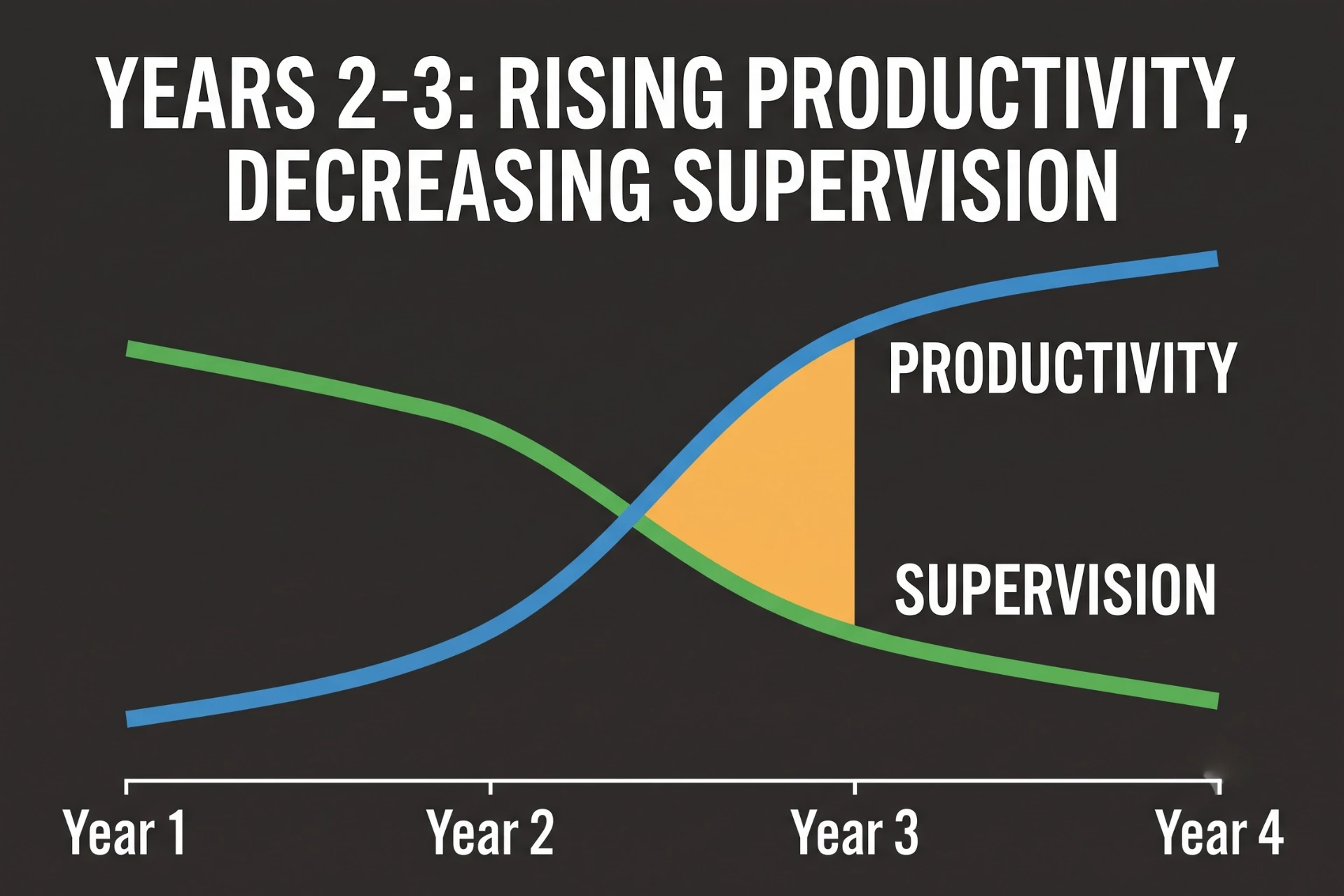
This is where the compounding starts. An apprentice in year two needs less oversight than they did in year one, which frees up your journeypersons to take on more of their own billable work instead of supervising.

Line graph illustrating increasing apprentice productivity and decreasing supervision needs over time.

Image Source: Gemini 2026

By year three, most apprentices are handling a growing share of tasks independently. Their pay still sits below the full journeyperson rate, but their output is closing the gap fast. That widening spread between what you're paying and what they're producing is the core of the ROI story, and it only shows up if you maintain the apprenticeship long enough to see it.

Year 4 and Beyond: The Journeyperson Payoff

When your apprentice achieves certification and becomes a qualified journeyperson, you gain a fully billable professional at the full rate, one who has been trained specifically to your standards, your safety culture, and your way of conducting business. That beats a journeyperson hired externally, who still has to unlearn someone else's habits.

There's also a loyalty dividend that's harder to put a number on but real all the same. Apprentices developed from the ground up tend to stay longer, because you invested in them when few other employers would.

Why Completion Rates Matter to Your ROI

The proportion of apprentices who exited their programs before completing them edged down slightly (‑0.3 percentage points) to 30.9% in 2024. That means in many four‑year apprenticeships, employers invest in training that never reaches the intended “year‑four” payoff.

Pre-apprenticeship training changes those odds. Students who complete an STC program have already spent months confirming they actually want a career in the skilled trades, not just a job. 

You're not gambling on someone's commitment. You're hiring someone who’s already tested it, which supports long-term skills development across your workforce, and who understands what schooling and on-the-job training will demand of them.
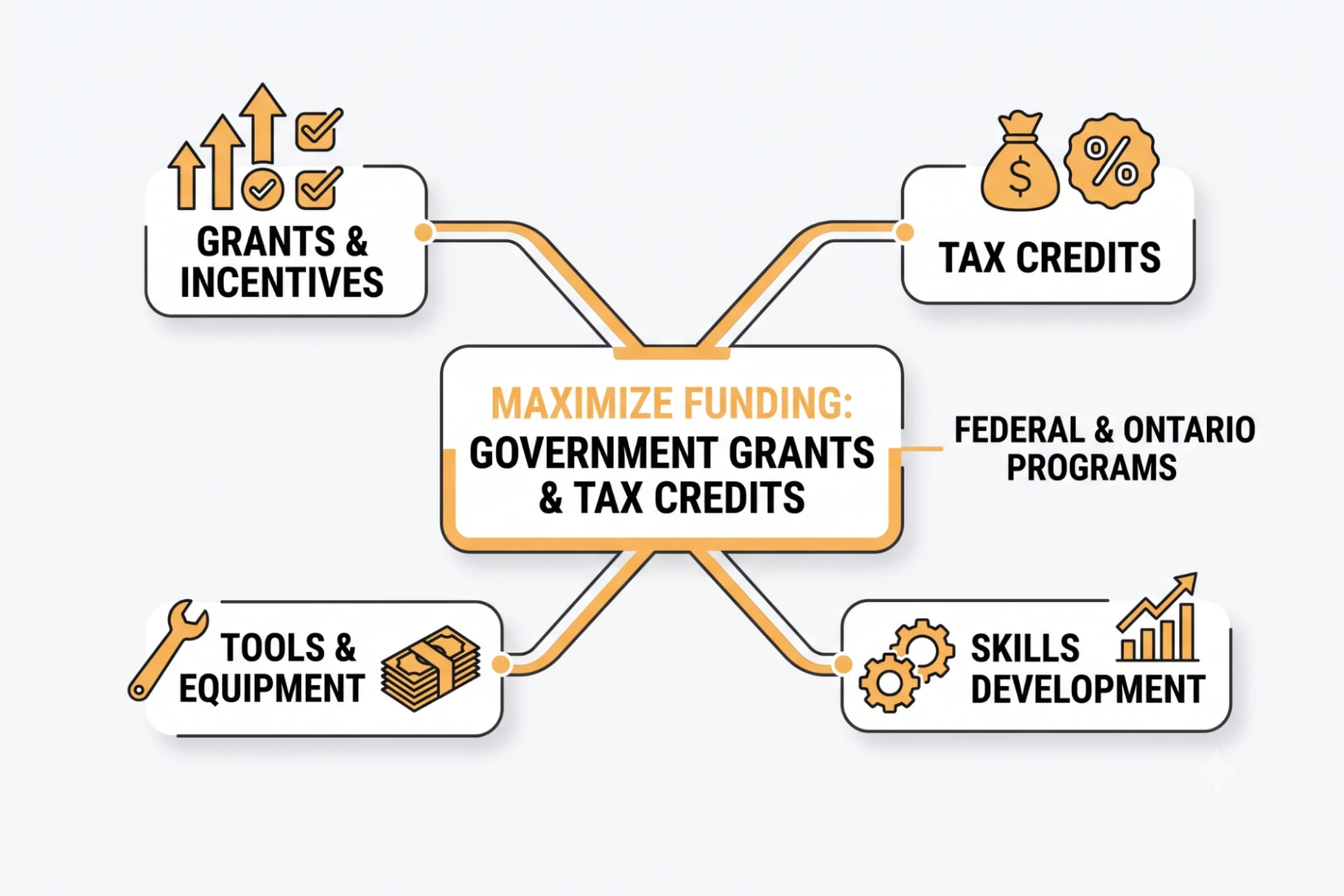
Infographic outlining federal and Ontario apprenticeship grants and tax credits

Image Source: Gemini 2026

FAQs About Apprenticeship Programs and Grants

Yes. Employers can access provincial and federal grants, including tax credits and training incentives, to help offset the cost of hiring and training a registered apprentice in Ontario.

Eligibility depends on whether the apprentice is registered in a Red Seal or non-Red Seal trade, as well as on business and employment criteria. See our For Employers page for full requirements.

Yes. Formerly known as the Canada-Ontario Job Grant, the Ontario Job Grant (OJG) is not limited to Red Seal trades; when the program is open, eligible employers can use it to fund short‑term training for employees in both Red Seal and non‑Red Seal trades, provided the training meets OJG criteria.

Only about one in five apprentices in Canada certify within the expected timeframe. Hiring pre-apprenticeship grads improves those odds, since they have already confirmed their commitment to the trade before starting.

Key Takeaways

  • Apprentice ROI unfolds over four years, not at hire
  • Ontario apprenticeship grants and tax credits offset Year 1 costs
  • Productivity rises, and supervision drops through Years 2 to 3
  • Journeyperson certification delivers full billable value plus loyalty
  • Only about one in five apprentices certify on time; pre-apprenticeship training improves the odds

See the Full Incentive Breakdown

The four-year view makes one thing clear: apprenticeship hiring isn't a cost you absorb, it's an investment with a defined payoff and government support built in to shorten the runway.

Whether you're sponsoring your first apprentice or expanding an existing program, the employers who win with this model are the ones who plan for the full four years, not just the first paycheque. 

Grants are limited, and applications are accepted on a rolling basis tied to each apprentice's start date, so earlier registration generally means better access to funding.

Ready to see exactly what apprenticeship incentive grants, tax credits, and Ontario Job Grant funding could mean for your business? Visit our employer page to see the full incentive breakdown, review eligibility, and register as a partner with Skilled Trades College of Canada.

Written by

Mike DiDonato

Chief Operating Officer

Mike Di Donato serves as the Chief Operating Officer at Skilled Trades College of Canada. With 25 years of expertise in business development, partnerships, and enhancing organizational efficiency, he has dedicated a decade to growing the college from one modest campus to six state-of-the-art locations across the Greater Toronto Area. Mike has played a strategic role in forging impactful partnerships—most notably the Building Champions Scholarship in collaboration with NBA Rookie of the Year Scottie Barnes. He has also spearheaded significant marketing initiatives, including establishing STC as the Official Partner of UFC, with visible branding integrations at UFC 297 and the launch of scholarship programs tied to UFC events.

View our Courses

Get Job-Ready
in 12 weeks

9,281+

LIVES CHANGED

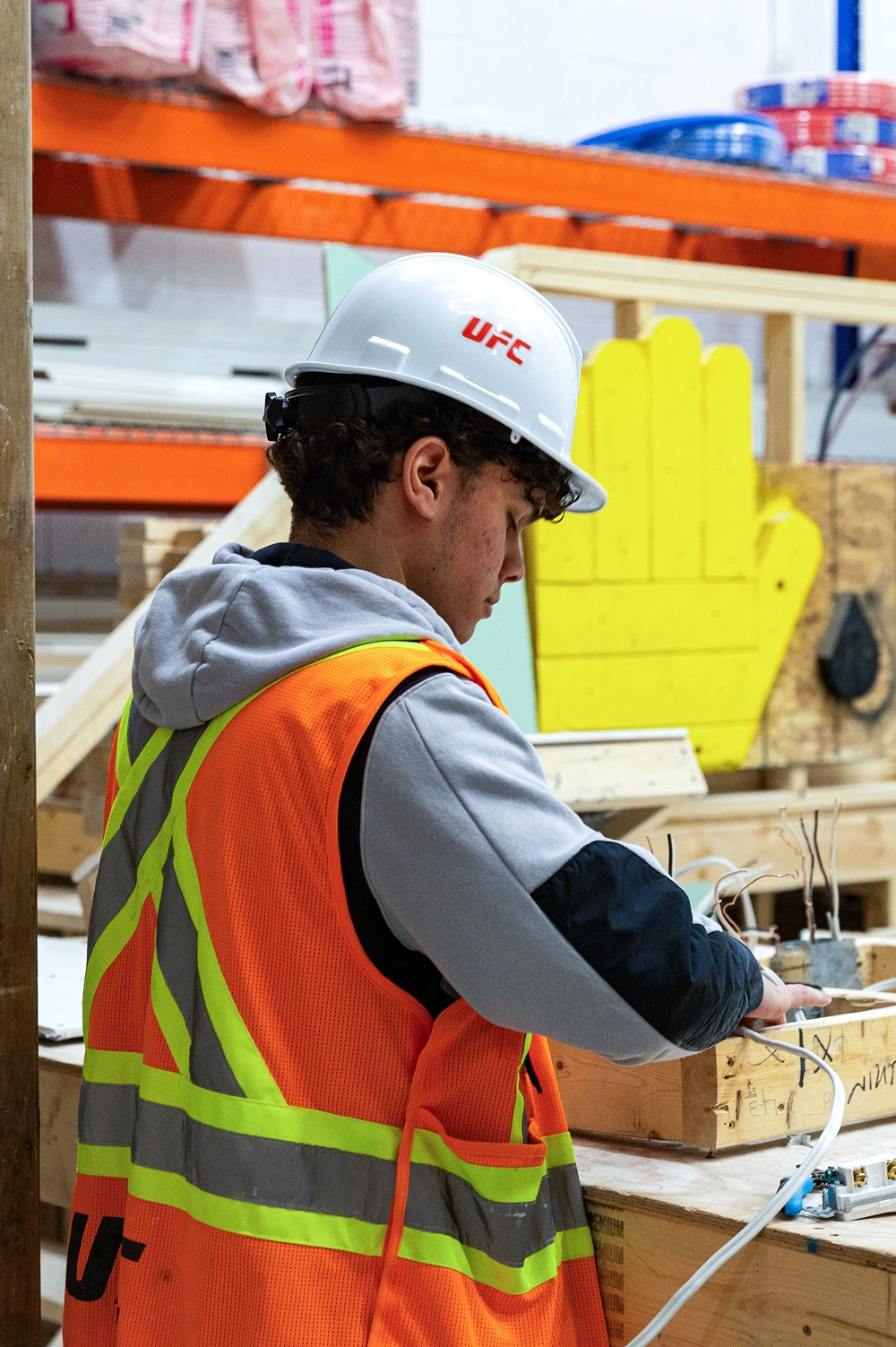
Young man wearing a UFC hard hat and orange safety vest working with electrical wires in a workshop.

12,481+

WIRES PULLED

12,481+ Wires Pulled - Skilled Trades College

85,382+

2X4'S CUT

85,382+ 2X4'S Cut - Skilled Trades College

9,756+

PIPES LAYED

Two construction workers wearing orange safety vests and white helmets installing black pipes in a wooden framed building interior.

9,281+

LIVES CHANGED

Young man wearing a UFC hard hat and orange safety vest working with electrical wires in a workshop.

12,481+

WIRES PULLED

12,481+ Wires Pulled - Skilled Trades College

85,382+

2X4'S CUT

85,382+ 2X4'S Cut - Skilled Trades College

9,756+

PIPES LAYED

Two construction workers wearing orange safety vests and white helmets installing black pipes in a wooden framed building interior.

9,281+

LIVES CHANGED

Young man wearing a UFC hard hat and orange safety vest working with electrical wires in a workshop.

12,481+

WIRES PULLED

12,481+ Wires Pulled - Skilled Trades College

85,382+

2X4'S CUT

85,382+ 2X4'S Cut - Skilled Trades College

9,756+

PIPES LAYED

Two construction workers wearing orange safety vests and white helmets installing black pipes in a wooden framed building interior.